
Tavern Master Beginner Guide
Start small enough to see every delay. Build one dependable service loop, then expand only when the bar, kitchen and staff can absorb the next group of guests. This Canada edition keeps official Steam facts identical while using regional English and dated platform guidance.
- Place the bar close to the first tables and leave clear walking lanes.
- Add food only when the kitchen can keep up with orders.
- Use research and events to raise guest variety instead of buying every object at once.
- Expand after fixing the slowest hand-off, not simply when cash becomes available.
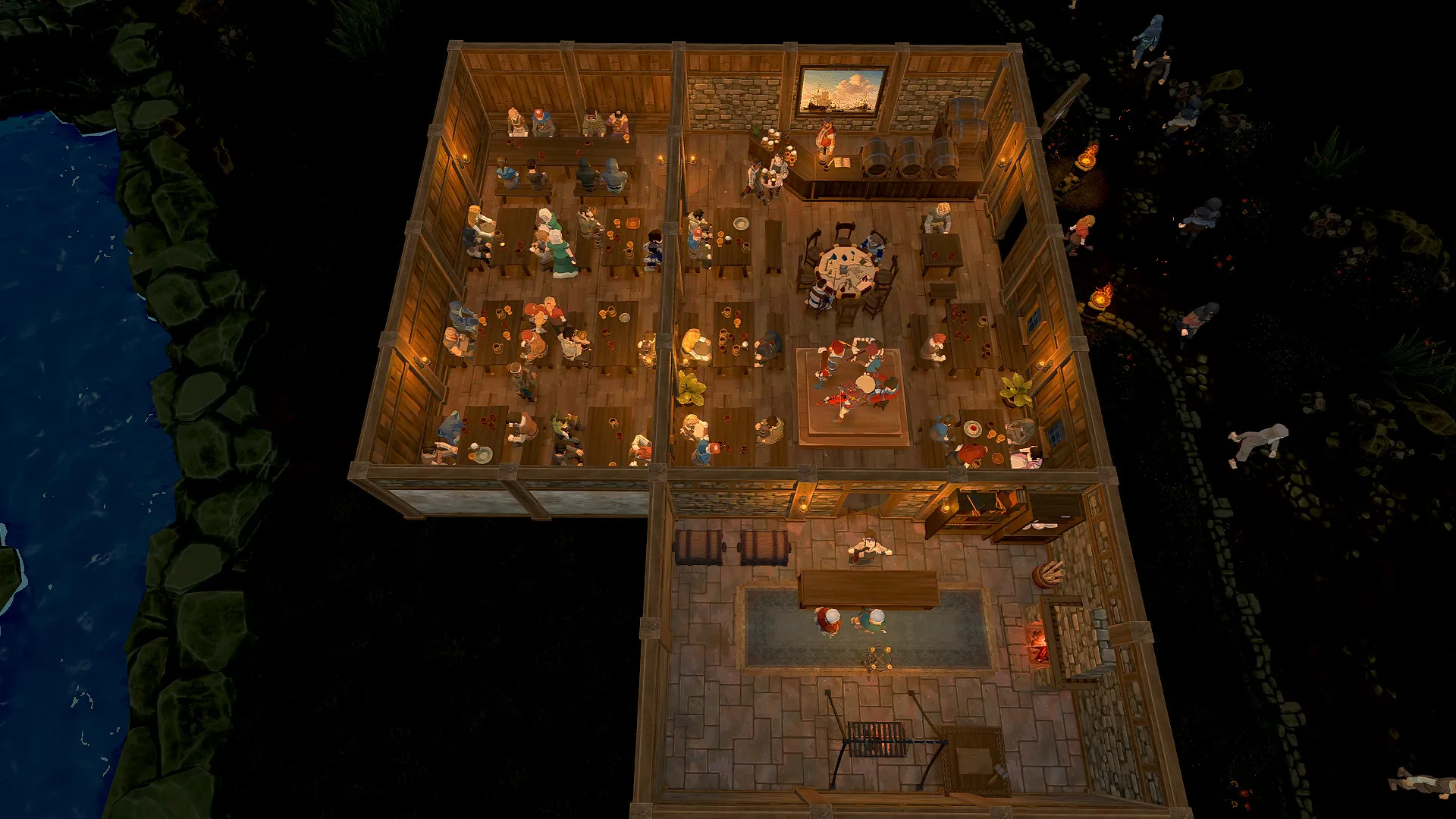
Build the first service loop
- 01
Keep the footprint compact
Put a small group of tables within a short walk of the bar. A crowded room with long detours is harder to diagnose than a modest room with clean lanes.
- 02
Hire for the queue you can see
Bartenders, waitresses and cooks solve different waits. Watch where orders stop before adding a second worker.
- 03
Open with a short menu
A smaller menu keeps the first kitchen readable. Add dishes after you know which station and ingredient flow is limiting service.
- 04
End the day with a note
Record empty barrels, unserved tables, idle staff and blocked paths. The next purchase should answer one observation.
Research, events and measured expansion
Research unlocks drinks, kitchen equipment, hotel features and additional floors. Serving rarer guests and later assigning researchers advances that tree, so a healthy service loop supports progression more reliably than decoration alone.
Events can concentrate a guest type and help level dishes, but they also create a demand spike. Stock drinks, confirm staff-floor assignments and keep spare tables before opening the doors.
- Level a useful dish instead of spreading orders across every recipe.
- Assign staff to the floors where their work exists.
- Keep one cash reserve for replacement barrels, kitchen equipment or a path correction.
- Use hotel rooms only after the core tavern can spare staff time for beds and guests.
Know when the tavern is ready to grow
Walking time is under control
Waitresses are not crossing the whole floor for every hand-off.
Open guideThe kitchen clears its queue
Cooks use the intended stations and ingredients are not the recurring stop.
Open guideBarrels are predictable
You know whether refills are manual or handled by a working brewery chain.
Open guideQuick answers
Is there one best beginner layout?+
No. The official description explicitly supports different play styles. Use short paths and visible queues, then adapt.
When should I add a second floor?+
After the current floor serves reliably and you can staff the new floor without starving the old one.
S1, S5, S6 · 2026-11-16
Open the source ledger →